Batch notes · 01
The milky test
A tonkotsu broth is done when a spoonful coats the back of the spoon and the surface holds a gloss. If you can see through it, it needs another hour. If it looks like cream, it is ready for tare.
My Lil' Cube is a compact ramen counter in Seattle, built around a simple idea: a short menu, cooked fast, served the second it is ready. No twenty-page menu, no ceremony — just five bowls we stand behind completely.
The room is small on purpose. You sit close enough to hear the noodles land, close enough to ask what is in your broth. Steam does most of the decorating. Rain does the rest.
Everything below is a sample of the format — the real menu lives on the chalk wall behind the counter. Come hungry, leave warm, slurp loud.
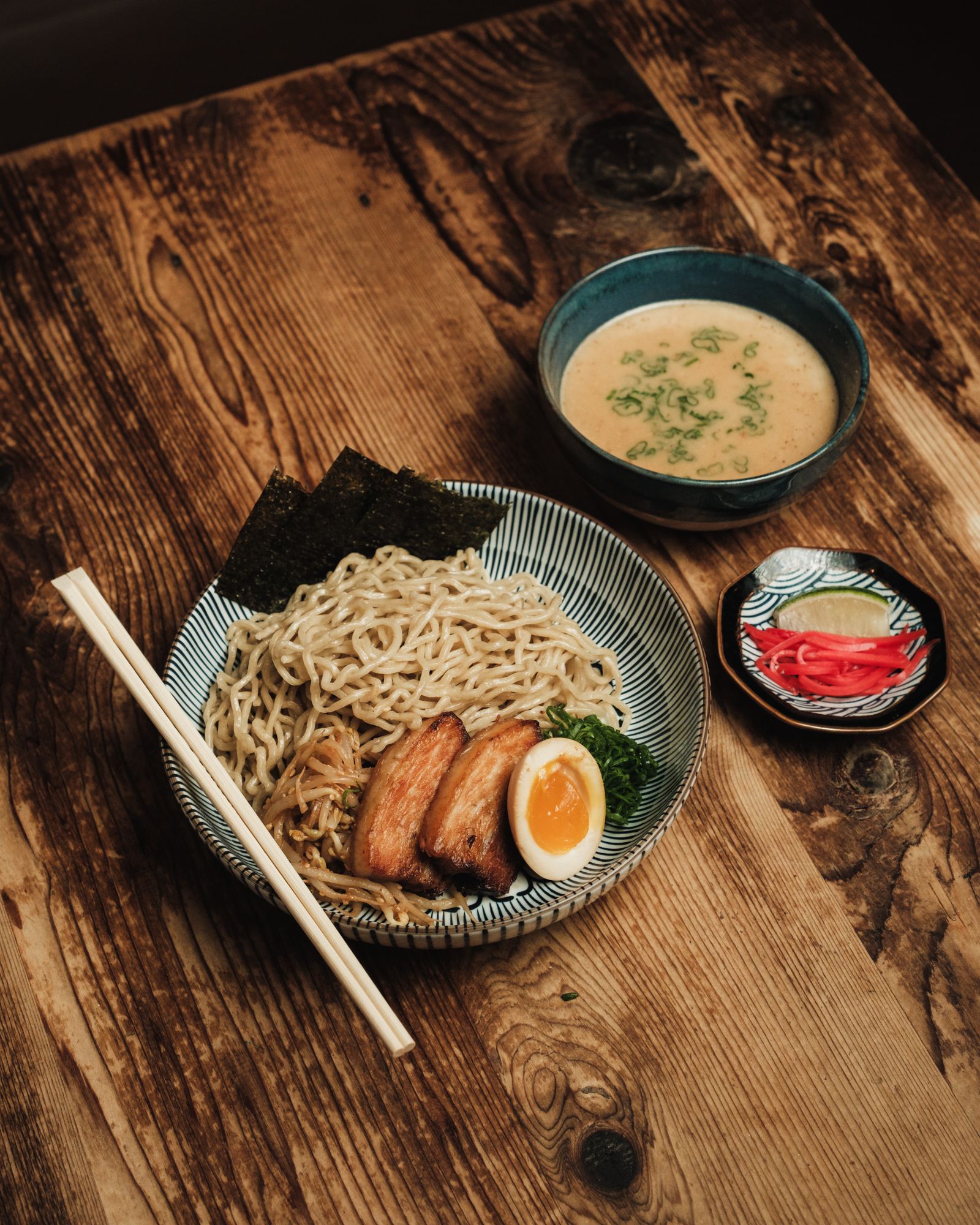
We keep the room small so the bowls can be loud.
A tonkotsu broth is done when a spoonful coats the back of the spoon and the surface holds a gloss. If you can see through it, it needs another hour. If it looks like cream, it is ready for tare.
Hours of simmering mean nothing if the seasoning is off. We mix tare in small batches and taste every one. Salt, soy, miso — each bowl gets its own ratio, measured, not guessed.
Noodles cook in their own rolling water, never in the broth. Starch in the soup muddies everything. Fresh water per batch, timed to the second, straight into the bowl.
Ajitama eggs marinate until the yolk turns to jam — not runny, not chalky. Six and a half minutes in the bath, then into the marinade overnight. There is no shortcut worth taking here.
Seattle rain calls for the heavyweight. On wet days we push the tonkotsu a touch richer and keep extra noodles ready. The room fills fast when the sky opens — we plan for it.
Twelve inches of wood between you and the kitchen pass. You will hear the noodles land, see the steam rise off your bowl before it reaches you, and learn more about ramen in one seating than any video could teach. The counter is the best seat in the house because it is the only kind of seat we have.
A bowl of ramen is a ninety-second argument. The noodles peak fast, the broth cools slowly, and the toppings are arranged to be eaten in a specific order — aromatics first, carried up by the steam. We build every bowl to be eaten immediately, which is why it arrives still roaring.
The real menu lives on the wall behind the counter, rewritten whenever the kitchen feels like it. Five bowls anchor it; the sides rotate with the season and the mood. If you see something new in chalk, order it — it might not be there next week.