Archive
Small room,
loud bowls.
Everything we know about ramen, filed the way we cook it: fast, hot, and without ceremony. Read top to bottom, the way steam rises. Eight chapters, one counter, five bowls.
Built like a cube, on purpose
The room is small because the bowl is the point. A counter, a kitchen pass, steam doing the decorating. You sit close enough to hear the noodles land.
Compact keeps us honest: a short menu, cooked fast, served the second it is ready. Nothing here was designed to photograph well from across the street. It was designed to taste good from eighteen inches away.
Violence, then patience
Tonkotsu wants a rolling boil — pork bones kept violent until fat emulsifies into the liquid and it turns milky. Clear broths want the opposite: a bare simmer, skimmed often, never clouded.
Seasoning lands last, in the bowl, as tare. Hours of simmering mean nothing if the tare is off, and everything if it is right.
Ninety seconds of glory
Ramen noodles are alkaline — kansui gives them spring, chew, and that yellow tint. Thin straight strands belong in tonkotsu; wavy ones belong in miso, where the ridges hold heavier soup.
A noodle has a short window between perfect and tired. Bowls leave the kitchen the moment they are built, which is why yours arrives still steaming and slightly defiant.
Loud is correct
Slurping cools the noodle and pulls air through the broth, which is exactly how you taste it fully. Quiet noodles are a missed opportunity.
Eat the noodles first while they are at their peak, drink the broth in between, save the egg for the moment you need a reset. There is no wrong order, but there is a best one, and the regulars will tell you.
Five bowls, no filler
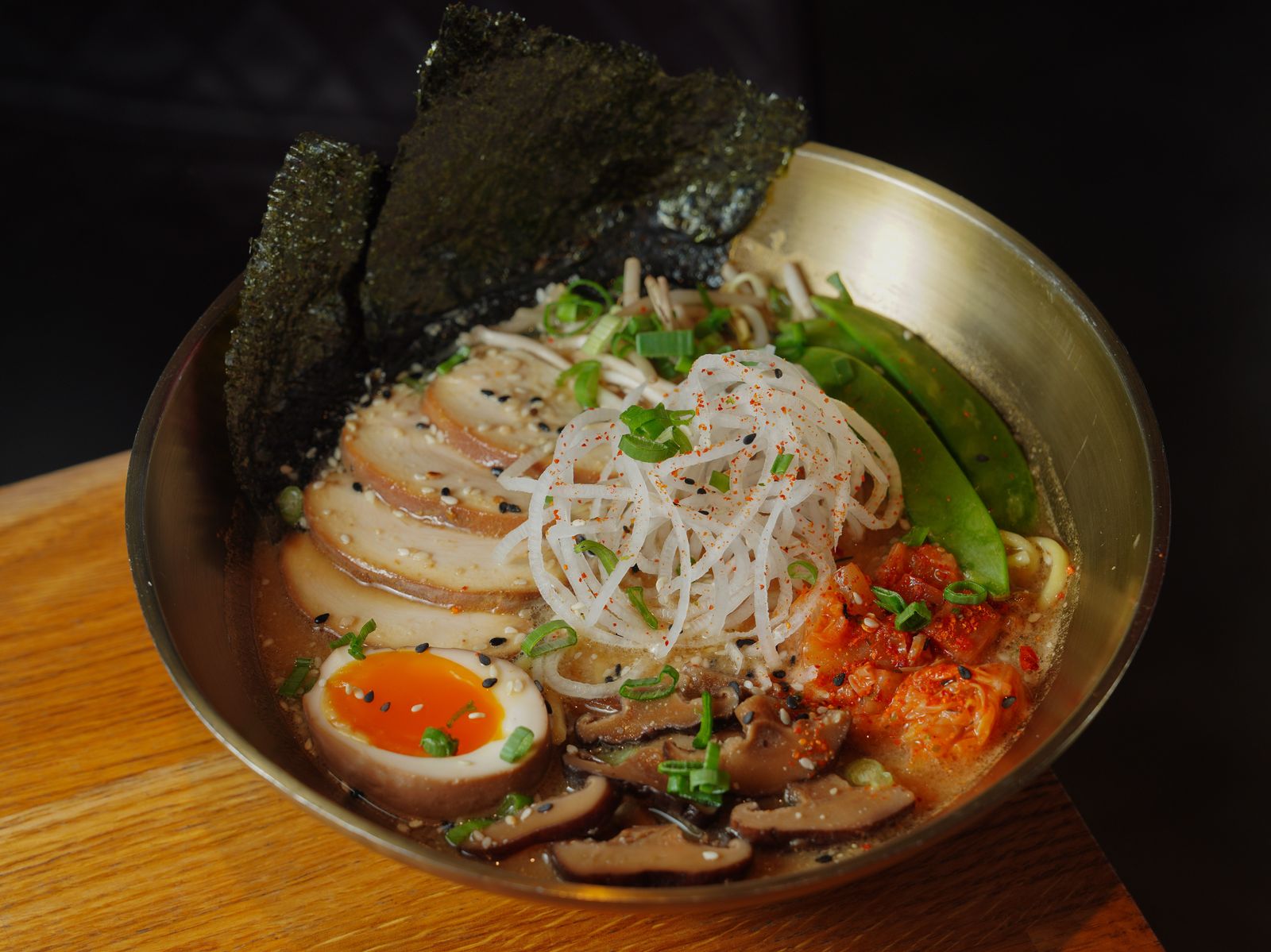
Tonkotsu for the heavyweight nights. Shoyu for the classicists. Miso for comfort. Shio for the minimalists. Tantanmen for the ones who like heat with their sesame.
Sample pricing — tonkotsu $15.50 · shoyu $14.00 · miso $14.50 · shio $13.50 · tantanmen $15.00
Walk in, sit down, slurp
No reservations, no ceremony. Take a counter seat, order at the counter, and the bowl lands still roaring. Call the counter at (555) 010-2030 if you need us.
The real menu lives on the wall behind the counter, chalk and all. What you read here is the archive — the room is the main event.
Written daily, erased nightly
Five bowls anchor the menu; the sides rotate with the season and the kitchen's mood. The chalk wall is rewritten whenever we feel like it — sometimes that means a new side, sometimes a broth tweak worth announcing.
If you see something new in chalk, order it. It might not be there next week, and the regulars who missed it will never forgive themselves.
Wet outside, roaring inside
Seattle rain calls for the heavyweight. On wet days we push the tonkotsu a touch richer, keep extra noodles at the ready, and run the room a little hotter. The door stays open, the steam stays up, and the counter fills fast when the sky opens — we plan for it the way sailors plan for wind.
Come damp, leave warm. That is the entire protocol, and it has never failed.
Come
hungry.
My Lil' Cube is a compact ramen counter in Seattle: five bowls, one counter, zero pretense. The archive ends here; the steam does not. Walk in, take a seat, and order loud.