Miami is not a difficult place to grow things — it is a difficult place to grow the wrong things. After seasons of mowing, planting, and fixing other people's planting, here is the whole of it, plainly stated.
D—01
The ground itself
Most of Miami sits on limestone with a thin layer of sandy soil on top. Water drains fast, nutrients wash out faster, and the pH runs high. That is why a lawn that thrives two streets over can starve on yours: the fill dirt under new construction is often nothing like the soil under an older lot. Before we design anything, we look at what is actually under the grass — how deep the topsoil goes, where water pools after a storm, which corners bake all afternoon. A planting plan drawn without that walk is a guess, and guesses die in August.
D—02
Grass, honestly
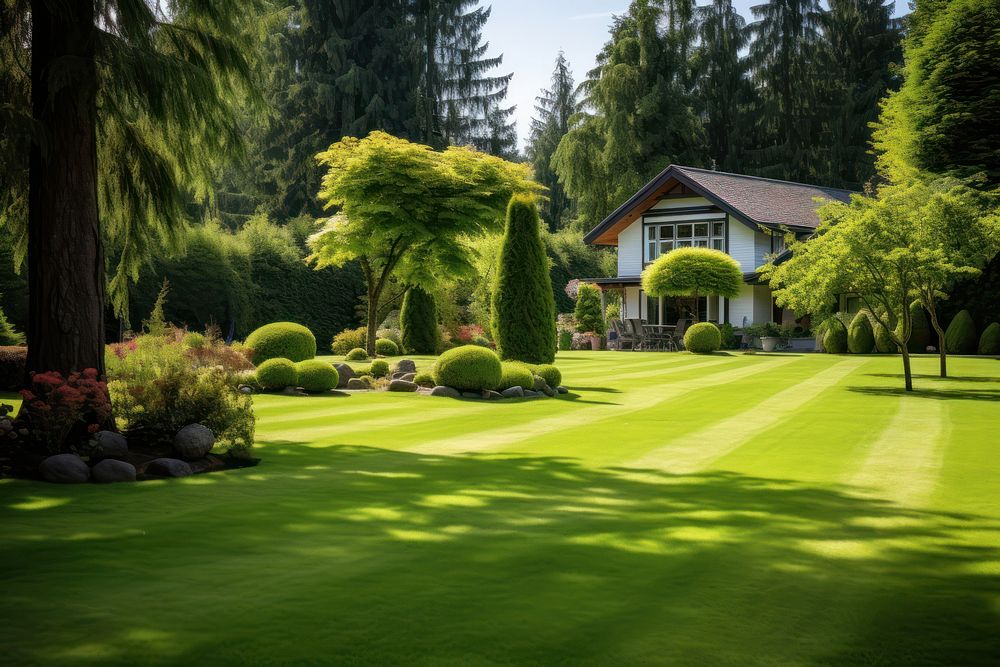
St. Augustinegrass is the workhorse of South Florida lawns, and for good reason: it handles heat, tolerates shade from palms and oaks, and knits into a thick carpet that crowds out weeds. It is also thirsty, hungry, and particular about mowing height. We cut it tall — three and a half to four inches — because a taller blade shades the soil, holds moisture through a dry spell, and keeps the roots deep. Short scalped lawns look sharp for a day and stressed for a month. We edge every visit, because a crisp edge is the cheapest upgrade a yard can get, and we mulch the clippings back into the turf instead of bagging them. Those clippings are free fertilizer; hauling them to the curb is throwing money in the truck.
D—03
Design for the rain cycle, not the brochure
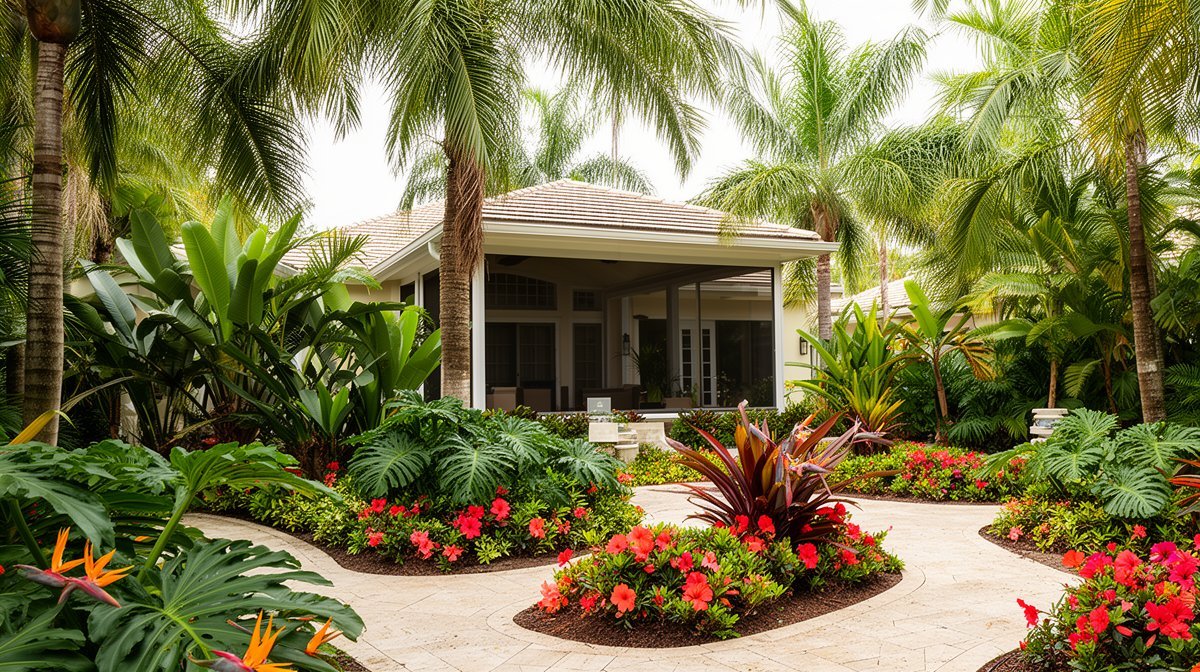
Miami gets roughly sixty inches of rain a year, and most of it arrives between May and October — often all at once, in the afternoon. A landscape designed for a catalog climate drowns here. We plant for the deluge and the dry months both: beds graded so water moves instead of sitting, mulch deep enough to hold moisture in February but not so deep it smothers roots in July, and plant choices that can stand wet feet for a week and then go three weeks without a drop. Native and Florida-adapted plants do most of this work on their own, which is why they anchor our designs. They ask for less water, less fertilizer, and less of your patience.
D—04
Installation without the drama
Installation day is where good plans usually fall apart, so we keep it boring on purpose. Plants go in at the right depth — the root flare at grade, never buried — with the root ball scored so circling roots do not strangle the plant a year later. Irrigation gets checked zone by zone before we leave, not "it should be fine." Beds get a clean edge and fresh mulch, and you get a one-page care sheet for the first ninety days: when to water, what is normal transplant sulk, and what is actually wrong. If a plant we installed fails in its first season for reasons that are our fault, we replace it. That policy has cost us very little, because we plant like we will be the ones coming back to look at it — and we are.
D—05
The maintenance habit
A yard is not a project with an end date; it is a habit. Hedges want shaping before they want rescuing. Palms want old fronds removed before storm season, not after. Beds want weeding when the weeds are small, which takes ten minutes, not when they have seeded, which takes a Saturday. Our maintenance routes are built around this: the same crew, on a rhythm your property actually needs — weekly in the growing season when St. Augustine is sprinting, easing off in the cooler months. Commercial clients get the same logic at a bigger scale: entries, parking islands, and common areas kept to a standard their tenants can see from the car. Consistency is the whole product. Anyone can make a yard look good once.
D—06
What "eco-oriented" means when we say it
We are careful with that word, because the industry is not. For us it is four concrete practices. One: clippings and small prunings stay on site as mulch whenever the property allows it. Two: we plant for Miami's rain cycle so irrigation is a backup, not a life-support system. Three: fertilizer goes down at labeled rates, timed to the growing season — more is not better, it is runoff. Four: we favor plant palettes that feed local pollinators and hold up without constant chemical rescue. None of this is a certification on the wall. It is just how we were taught to do the work, and how we keep doing it.
D—07
Storm season, planned not panicked
June through November, every Miami yard lives under the same question. We do pre-season canopy work — thinning dense crowns so wind passes through instead of pushing against a sail, removing deadwood that becomes projectiles, checking palms for boots and old fronds. It does not make a tree stormproof; anyone who promises that is selling something. It makes the yard dramatically less likely to become a cleanup bill. After a storm passes, our route clients get priority cleanup visits: debris cleared, broken limbs cut clean so they heal, beds put back in order. The yards we maintain year-round are the ones that bounce back fastest, because there is less dead weight in them to begin with.
D—08
Who this is for
Homeowners who want the yard handled — designed once, installed right, maintained without reminders. Property managers and small commercial owners who need grounds that look intentional every single week, not just the week after a complaint. If you want the cheapest cut in the neighborhood, we are not it; there is always someone with a mower and no insurance who will go lower. If you want one crew that knows your property by name, shows up on rhythm, and treats the design and the maintenance as the same job — that is the work we do, and we have the Miami summers to show for it.