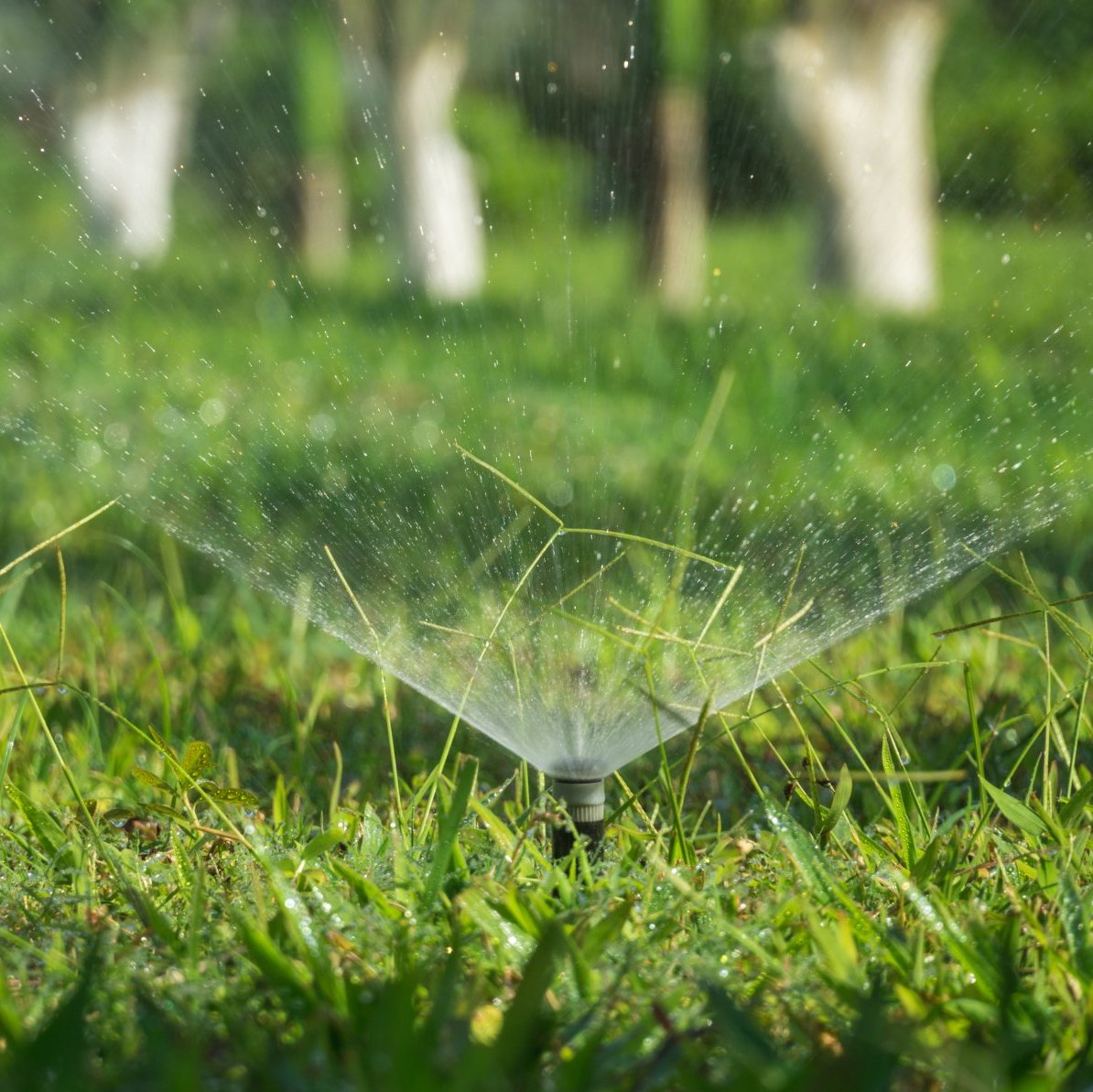
Act I — Water
Every good yard starts underground.
Before a single plant goes in, we think about water: where it comes from, where it lands, and where it leaves. A sprinkler system is plumbing that lives outside — it freezes, it clogs, it gets chewed by roots. Ours are designed for that reality, with zones sized for Denver water pressure and heads placed so they water grass, not concrete.
New systems start with a pressure test and a zone map — how many heads each zone can actually carry, not how many fit on paper. Then trenching, pipe, valves, and a controller you'll understand without a manual.
Broken heads, stuck valves, wiring faults, coverage gaps. Most repairs take one visit. We stock the common parts on the truck so a fix doesn't become a two-week saga.
Pressurize zone by zone, adjust every head, reprogram the controller for the season. Sample from $95 — the cheapest visit of the year.
Compressed air clears every zone before the freeze. Sample from $85. The most expensive repair we see each spring is a system that skipped this.
Mid-season coverage audits in the heat. Brown spots get traced to a cause — a clogged nozzle, a tilted head — not masked with more minutes on the timer.
Act II — Ground
Grade is destiny. Water always wins.
Denver soil is clay. Clay holds water against foundations, swells, and heaves whatever sits on it. So the second act is grading and drainage: re-sloping the yard so water runs away from the house, cutting swales where the low spots collect, and fixing the slope issues that make patios sink and basements weep.
We re-establish fall away from the foundation — a minimum of six inches over the first ten feet — and reshape low spots that pond after every storm. Most "mystery basement water" starts in the yard, not the basement.
French drains, channel drains, and downspout extensions where grading alone can't finish the job. Sized for cloudburst rain, because Denver storms don't do gentle.
Amendments and proper compaction before sod or seed. Grass planted on unprepared clay is a rental — it looks fine for a season, then the bill comes due.
Seasonal cleanups, bed refreshes, mulch top-ups. The ongoing work that keeps a graded, drained yard from sliding back to where it started.
Act III — Stone
Then the parts you actually see.
Only after water and grade are handled do we build the visible layer — and because the groundwork is right, the visible layer lasts. Walls that don't lean, patios that don't sink, fences that still latch in a March wind. Here's the full ledger:
Landscaping — design & build
Beds · Sod · PlantingsRetaining walls
Block · StoneConcrete flatwork
Drives · Patios · WalksBrick pavers
Patios · WalkwaysFencing
Cedar · WoodSnow removal
Residential · CommercialHoliday lights
Install · StorageThe way a job runs never changes: a free walkthrough on site, a written itemized quote, a start date with two-hour arrival windows, and a warranty in writing. We serve Denver, Englewood, Littleton, Centennial, and Lakewood — weekdays 7 to 5, Saturdays 8 to 2, emergencies around the clock.
The last act is yours
Start with a walkthrough.
Free, on your property, no pressure. We'll look at the grade, the pressure, the sun — and give you a written number. If it's over budget, we'll tell you what to phase and what you can honestly do yourself.